
What is
psychedelic therapy
really?
No mystification. No exaggeration. Just an honest answer to the questions most people are too nervous to ask out loud — from the people who do this work every day.
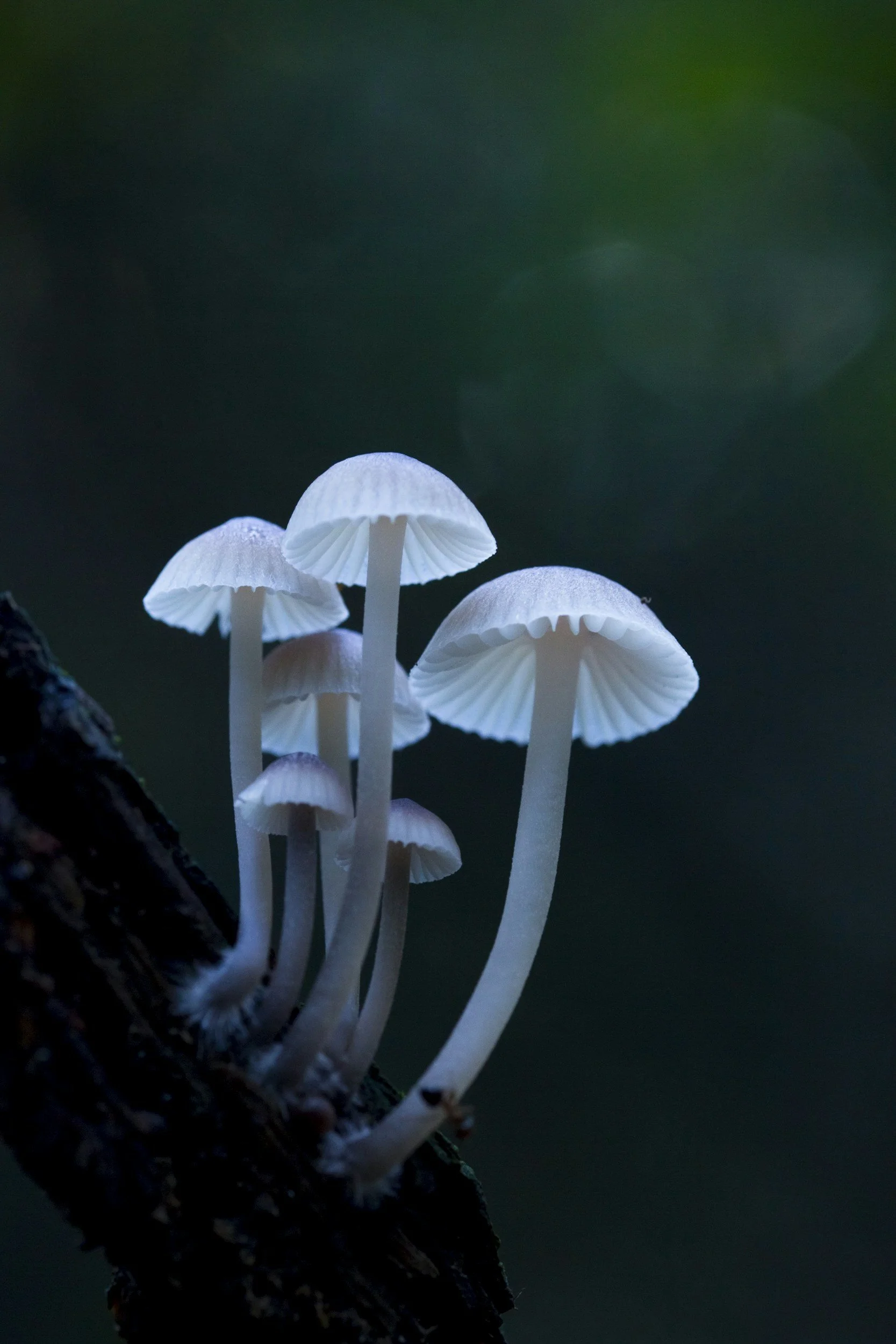
Psychedelic-assisted therapy is not recreational drug use. It is not a spiritual retreat. It is not a shortcut or a magic pill. It is a clinically supervised therapeutic process that uses psilocybin — a naturally occurring compound found in certain species of mushrooms — to facilitate a non-ordinary state of consciousness in which deep emotional and psychological healing becomes possible.
Psilocybin works by temporarily disrupting the brain's default mode network — the system responsible for the rigid, repetitive patterns of thought and self-narrative that keep people stuck. In this window of neuroplasticity, the mind becomes more open, more connected, and more capable of processing what it has been carrying.
At Kulandira, this process is always paired with nutritional medicine, medical team collaboration, and dedicated integration support — because the medicine is only one part of the healing.
— THE HONEST ANSWERIt is not what you probably think.
"The medicine does not do the healing. It creates the conditions for you to do it yourself — more quickly, more deeply, and more completely than most other approaches allow."

— COMMON MISCONCEPTIONSWhat psychedelic therapy is not.
These are the most common fears and misunderstandings we encounter — and the honest truth behind each one.
“It’s just getting high.”
Psychedelic-assisted therapy is a clinically supervised therapeutic process, not recreational drug use. The context, the intention, the setting, and the professional support change everything about what the medicine does and how it is processed.
✕ Not recreational
"It will fix everything in one session."
The ceremony is powerful — but it is the beginning of the healing, not the whole of it. Integration, nutritional support, and ongoing care are what make the change last. Kulandira supports you through all of it.
✕ Not a magic fix
“I'll lose my mind.”
You cannot lose control, forget who you are, or become someone else. You remain conscious and oriented at all times. The experience is intense — but you can open your eyes, speak, and ground yourself at any point. Your sitter and facilitator are with you the entire time.
✕ Not losing control
"Everyone has the same trip."
No two experiences are alike. Your journey is entirely personal — shaped by your history, your intention, and what your system most needs to process. This is not a generic experience. It is uniquely yours.
✕ Not the same every time
“Anyone can do it.”
Psychedelic-assisted therapy is not appropriate for everyone. We conduct thorough health screening before every ceremony. Certain medical conditions and medications require careful assessment. This is exactly why working with a qualified practitioner matters.
✕ Not for everyone
"It’s against the law.”
The legal landscape around psychedelic therapy in Canada is still evolving. What does not change is our commitment to safety — rigorous screening, professional training, and your wellbeing above everything else.
✕ Not illegal
— THE NEUROSCIENCEWhy it works
when other things haven't.
For decades, scientists dismissed psychedelics. Then Johns Hopkins, Imperial College London, and NYU began studying them rigorously — and the results were unlike anything conventional psychiatry had produced. Here is a plain-language explanation of why.
The brain has a system called the Default Mode Network (DMN) — the part responsible for your sense of self, your rumination, your habitual thought patterns, and your internal narrative. In people with depression, anxiety, PTSD, and addiction, the DMN is often hyperactive — locked in rigid, repetitive loops that resist change no matter how much therapy or medication is applied.
Psilocybin temporarily quiets the DMN. In its place, new connections form across areas of the brain that rarely communicate. The result is a state of increased neuroplasticity — a window in which deeply held patterns can be examined, processed, and released in ways that are simply not accessible in an ordinary state of consciousness.
🧠 NEUROPLASTICITYPsilocybin promotes the formation of new neural connections and the pruning of old ones — essentially giving the brain a temporary state of increased flexibility and openness to change.
🔄 DEFAULT MODE NETWORK RESETThe brain's self-referential system — responsible for rumination, rigid identity, and habitual thought patterns — is temporarily quieted, allowing new perspectives and processing to emerge.
💊 SEROTONIN SYSTEM ENGAGEMENTPsilocybin binds to serotonin receptors — particularly the 5-HT2A receptor — in ways that produce the characteristic shift in consciousness and emotional openness associated with therapeutic benefit.
⚡AUTONOMIC NERVOUS SYSTEM REGULATIONEmerging research shows psilocybin helps restore balance to the autonomic nervous system — the physiological foundation of the trauma response and the reason so many clients feel physically transformed, not just emotionally changed.
— WHAT PEOPLE EXPERIENCEWhat might happen for you.
Every experience is unique. These are the most commonly reported dimensions of a psilocybin-assisted session — not predictions, but possibilities.
Important: No two sessions are identical. What you experience will be shaped by your personal history, intention, the dose, the setting, and the support around you. Kulandira prepares every client thoroughly so they arrive with realistic expectations and genuine readiness.

Visual Imagery
Vivid patterns, colours, and imagery — with eyes open or closed. Not hallucinations in the clinical sense, but a richening of perception.
Emotional Release
Grief, love, gratitude, or peace — often accessed with a depth and ease that has felt impossible in ordinary life. Many clients cry for the first time in years.
Self-Compassion
Many clients encounter their own pain with a warmth and compassion they have never been able to access before — often forgiving themselves for the first time.
Difficult Moments
Not every experience is immediately comfortable — and that is okay. Difficult moments are often the most therapeutically significant. You are always supported.
Interconnectedness
A profound sense of connection — to yourself, to others, to nature, to something larger. Often described as the most meaningful experience of a person's life.
Peace and Stillness
Some people simply rest in deep, profound stillness — a quality of peace they have not felt in years, or ever. Often described as coming home.
Insight and Clarity
Sudden, clear understanding of patterns, relationships, or beliefs that have been driving suffering. A felt sense of "I finally understand why."
Mystical Experience
A sense of transcendence, unity, or the sacred. Scientifically associated with the best long-term therapeutic outcomes — even by researchers who do not consider themselves spiritual.
The questions
people are afraid
to ask out loud.
These are the real questions we hear most often — answered honestly, without mystification or oversimplification.
- QUESTIONS AND ANSWERS
-
The term "bad trip" comes from recreational, unsupported use. In a properly prepared, clinically supervised ceremony, difficult moments may arise — but they are different from what that phrase implies. Challenging experiences in a supported therapeutic context are often the most healing. You are never alone, and Nicolette and your sitter are trained to support you through whatever arises.
Preparation is everything. The more thoroughly you prepare — emotionally, physically, and with clear intention — the more safely and productively your system can process what comes up.
-
This is one of the most important questions — and one of the reasons we work closely with your doctor before every ceremony. SSRIs and SNRIs can reduce the effectiveness of psilocybin and in some cases carry interaction risks. We review every medication individually. In many cases, a careful, medically supervised tapering process precedes the ceremony. Nothing is done hastily or without clinical oversight.
-
Most people retain clear memories of their experience — often with unusual clarity. Some experiences are non-verbal or body-based and may be felt rather than remembered in the conventional sense. This is why journaling, your integration call, and Nicolette's support in the days that follow are so important — they help you capture and make sense of what you experienced before it fades.
-
The acute effects of a psilocybin session typically last between 4 and 6 hours, with a gradual return to baseline over the following few hours. Many people notice an afterglow — a quality of openness, warmth, and clarity — in the days that follow. The deeper therapeutic benefits, when properly integrated, can last months or years. Research at Johns Hopkins has shown sustained effects at 12-month follow-up from a single session.
-
Many of Kulandira's clients come with no prior experience of plant medicine or non-ordinary states of consciousness — and that is entirely fine. In some ways, arriving without preconceptions allows for a more open experience. The preparation process is thorough and unhurried. By the time your ceremony day arrives, you will feel genuinely ready.
-
Integration is the process of making meaning from your experience and translating it into lasting change in your life. The ceremony opens a door — integration is how you walk through it. Without proper integration, even a powerful ceremony may not produce lasting results. This is why every Kulandira package includes an integration call with Nicolette, and why ongoing nutritional monitoring and medical coordination continue after your ceremony.
-
For most of Kulandira's clients, one ceremony is enough. The depth of healing that becomes possible with proper preparation and genuine integration is often more than people expect. Some clients return for a second session — and that is entirely valid. Not because the first one failed, but because it opened something that wants to go further, and a second session feels like the right next step. Every person is different, and what is needed always depends on what emerged, what was processed, and where you are afterwards. Our only goal is your healing.

— A BRIEF HISTORYThis is not
new. It is ancient.
Plant medicines have been used in traditional healing practices for thousands of years — by Indigenous cultures across the Americas, Africa, and Central Asia. What is new is the rigorous clinical research validating what those cultures always knew.
The modern story of psychedelic therapy is one of discovery, suppression, and renaissance. We are living through a moment in which the most respected research institutions in the world are rediscovering what ancient wisdom preserved through millennia of persecution and prohibition.
Understanding this history is part of approaching the work with the respect it deserves.
Ancient
Traditional Ceremonial Use
Plant medicines used for healing, spiritual guidance, and community across Indigenous cultures worldwide — from the Amazon to Mesoamerica, Africa, and Siberia.
1940s–60s
First Wave of Western Research
Researchers like Humphry Osmond and Stanislav Grof explore psychedelics for trauma, alcoholism, and end-of-life distress. Promising results — then halted by political pressures.
1971
Research Suppressed
The United Nations Convention on Psychotropic Substances effectively halts legitimate research globally. A generation of potential healing is lost.
2000s
The Renaissance Begins
Johns Hopkins, Imperial College London, NYU, and UCSF begin rigorous clinical trials. Results exceed anything conventional psychiatry has produced for treatment-resistant conditions.
2021-Present
A Legal Framework Begins to Emerge
Governments across North America, Australia, and Europe begin establishing legal pathways for the therapeutic use of psilocybin and MDMA — as decades of clinical evidence finally shift the regulatory conversation worldwide.
— SAFETY & STANDARDSHow Kulandira keeps you safe.
Safety is not a feature at Kulandira. It is the foundation of everything. Here is exactly what that looks like in practice.
Medical Assessment
Thorough health screening for every individual before any ceremony proceeds. We review your full medical history, medications, and mental health history to ensure this is the right path for you.
Medical Team Collaboration
We work with your doctor — not around them. All medication adjustments and tapering happen slowly, carefully, and in full coordination with your prescribing physician.
Full Informed Consent
Nothing happens without your complete understanding and consent. You are in charge of your own process at every step. There is no obligation to proceed with anything.
Sitter Support Throughout
A trained, compassionate sitter is present with you throughout the entire ceremony day. You are never alone. You are always held.
READY TO LEARN MORE?Every journey begins with a conversation. Sometimes, it begins with a question.
You have asked it by being here. The next step is simply a conversation — honest, pressure-free, and entirely on your terms.
We never ask anyone to take a leap of faith. We ask them to ask all of their questions and then make an informed decision. This page is the beginning of that journey. A conversation with us is the next step.